





Structural Features Of Uninterruptible Power Supply Systems
Jul 20, 2026
Leave a message
As data centers, telecommunications networks, industrial automation, medical equipment, and intelligent infrastructure continue to expand, the demand for continuous and reliable power is increasing. An uninterruptible power supply, commonly known as a UPS, is an essential backup power device whose internal architecture directly affects power quality, response time, efficiency, and overall reliability. By coordinating several functional modules, a UPS can maintain power to critical loads when the utility supply becomes unstable or unavailable.
A typical UPS consists of a rectifier and charger, inverter, energy storage batteries, static bypass switch, control system, and input and output interfaces. The exact configuration varies according to the UPS topology and product design, but the overall architecture is centered around power conversion, energy storage, controlled output, and system management.
The rectifier and charging section is one of the key components. When utility power is available, the rectifier converts incoming AC power into DC power. This DC supply can provide energy to the inverter while also charging the battery system. A properly controlled charging process helps keep the batteries within an appropriate operating range and prepares the stored energy for backup operation.
The inverter is the core power conversion component. During normal operation, the UPS can use the inverter to deliver regulated AC power to connected loads. If the utility supply fails or falls outside the specified range, stored DC energy from the batteries is converted into AC power through the inverter, allowing critical equipment to continue operating. The performance of the inverter has a direct influence on output power quality.
The battery system provides the stored energy required for backup operation. Common technologies include valve-regulated lead-acid batteries and lithium-ion batteries. Battery capacity and quantity are selected according to factors such as load power and the required backup runtime. Battery monitoring and management functions are also important for tracking battery condition and supporting reliable operation.
The static bypass circuit provides an alternative power path under specific operating conditions. If the UPS requires maintenance or experiences an internal fault, the bypass system can transfer the connected load to an alternative power source, depending on the equipment design. This can help reduce the risk of an interruption caused by a UPS fault.
The control system serves as the operational management center of the UPS. It monitors parameters such as input voltage, output voltage, load conditions, and battery status while coordinating the operation of different functional modules. Many modern UPS systems also include communication interfaces and remote monitoring capabilities, allowing users to track operating conditions more conveniently.
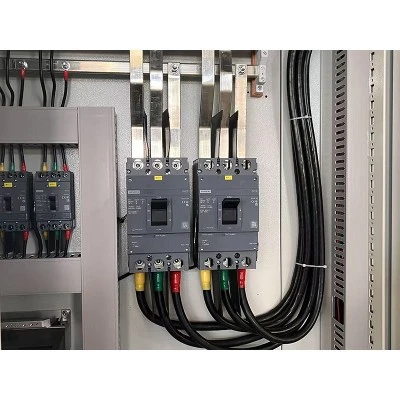
UPS equipment is commonly housed in cabinet-style or modular enclosures and may include cooling systems, protective structures, and various electrical safety functions to meet different installation requirements.
Overall, UPS systems feature an integrated architecture in which power conversion, energy storage, output regulation, and control functions work together. A well-designed structure enables rapid response, stable power delivery, and dependable backup operation, providing critical equipment with an important layer of protection against power interruptions.
Send Inquiry