



Types Of Switchgear For Different Power Distribution Requirements
Jul 20, 2026
Leave a message
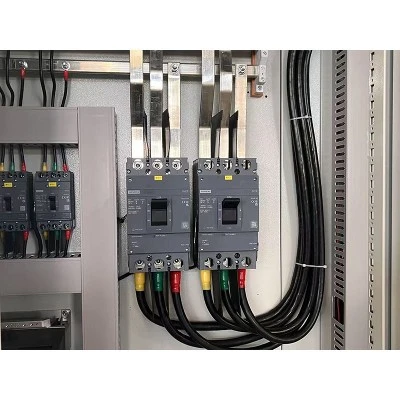
As power infrastructure, industrial facilities, commercial buildings, and renewable energy projects continue to develop, electrical distribution systems require greater levels of safety, reliability, and operational flexibility. Switchgear is an essential part of modern power systems, serving functions such as receiving, distributing, controlling, and protecting electrical power. Depending on voltage level, construction, installation environment, and intended function, switchgear can be divided into several major categories for different electrical applications.
Based on voltage level, switchgear is generally classified as low-voltage, medium-voltage, or high-voltage equipment. Low-voltage switchgear is commonly used in factories, commercial buildings, public facilities, and low-voltage distribution systems for power distribution and circuit control. Medium-voltage switchgear is frequently installed in substations, industrial power systems, and large facilities where electrical equipment must operate at higher distribution voltages. High-voltage switchgear is used in high-voltage transmission and distribution systems and typically requires advanced insulation, mechanical strength, and operational reliability.
Switchgear can also be classified as fixed or withdrawable according to its construction and installation method. Fixed switchgear contains components that remain in a designated position during normal operation and generally offers a relatively compact configuration. Withdrawable switchgear incorporates movable functional units or circuit breaker trucks, allowing equipment to be withdrawn for inspection, testing, or replacement. This design can improve maintenance efficiency and reduce the complexity of servicing electrical equipment.
Another common classification is based on installation location. Indoor switchgear is typically installed in electrical rooms, substations, and industrial buildings where the operating environment can be controlled more easily. Outdoor switchgear must withstand exposure to rain, temperature fluctuations, dust, and other environmental conditions, so enclosure protection, sealing, and environmental durability become particularly important.
Switchgear can also be categorized according to its specific role within a distribution system. Common configurations include incoming feeder panels, outgoing feeder panels, bus-section or tie panels, metering panels, and capacitor bank panels. Each type performs a specific function, and multiple panels can be combined according to the electrical single-line diagram to create a complete distribution system.
With the development of smart power distribution technology, modern switchgear is increasingly equipped with measurement, communication, protection, and monitoring functions. When integrated with intelligent control devices, switchgear can provide real-time operating data and support condition monitoring, helping improve the visibility and management of electrical systems.
Overall, switchgear is available in a wide range of configurations to meet different power distribution requirements. Selection should take into account voltage level, rated current, installation environment, load characteristics, protection requirements, and maintenance needs. Choosing an appropriate switchgear configuration can improve the safety, reliability, and operating efficiency of a power distribution system while providing a dependable foundation for modern electrical infrastructure.
Send Inquiry